
NAVIGATING THE IN-BETWEEN WITH QUETZAL MAUCCI
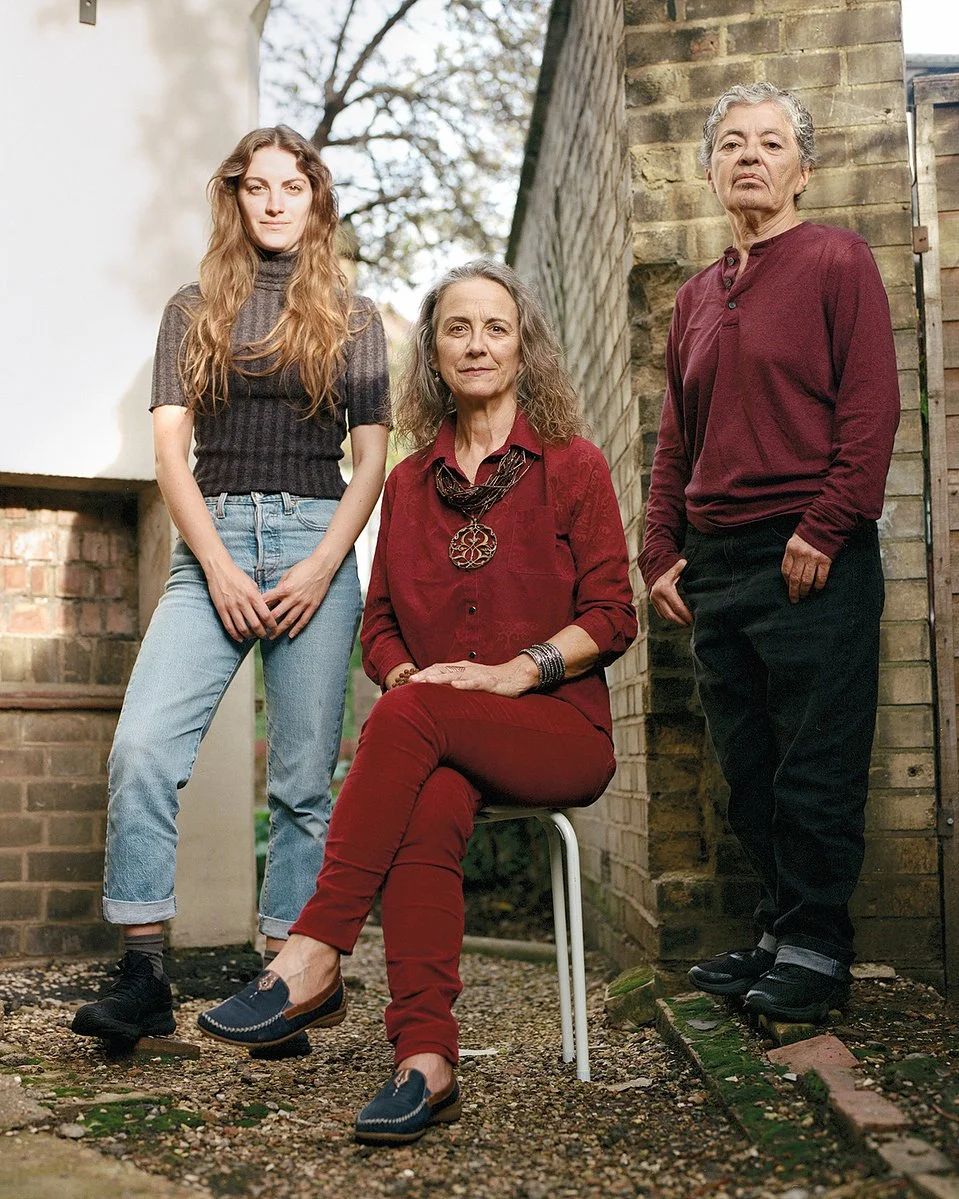
Quetzal Maucci, By The Time She Grows Up, 2024.
THE ARTIST WITH HER MOTHERS in 2022 near HER home in London. LEFT TO RIGHT: QUETZAL MAUCCI, her mother FLAVIA, AND her mother LU.
Quetzal Maucci is a lens-based artist and educator living in London. Through documentary-style images, text, and personal narrative, she interrogates dominant ideas of migration, identity, and belonging. In conversation with Maucci, she frames her identity as layered rather than imperfect, reflecting on how she navigates the in-between spaces of memory, family, and inheritance with both care and resistance.
The theme of our issue, “The Pursuit of Imperfection” asks: Where (if ever) do you notice yourself trying to perfect belonging instead of letting it be messy? Much of your work sits in the “in-between spaces” where memory is partial, relationships are interrupted, and history is inherited but not always fully explained.
When you think about “imperfect belonging,” where does that idea land in your own life?
In my personal practice, I work through ideas of memory, family, belonging, and identity not as neatly resolved narratives, but as holding space for complexity, for discussion, for evolving and shifting understandings. I see myself now as a layered being, shaped by many experiences, with a desire to be in conversation and in solidarity. Learning and discussing and learning and questioning. Through creating work that explores belonging, I have been able to process, reflect, and transform my understanding of myself and of what belonging means. I don’t believe I’ve ever tried to perfect anything, but instead I try to understand and reflect on these in-between spaces.
In Children of Immigrants portrait testimonies and your own childhood narratives in By The Time She Grows Up, which was featured in Time Magazine under the article named How My Mothers Shaped Me, you often move between personal memory and collective narratives of motherhood, migration, queerness, and the quiet weight of inheritance. When you begin a project, what usually surfaces first: an image, a question, or a feeling?
It is different for every project. Overall, the work I do in my personal practice arises from frustration with the political climate and a need to process thoughts, feelings, and experiences. I am drawn to work that revolves around social constructs, diasporic experiences, resistance, and therapeutic photographic processes.
I am aware of and intrigued by the tension between keeping my work personal and insular and placing it in conversation with the questions, topics, and experiences that others are also navigating. I am still learning what this balance looks like in my projects. The point for me is to create conversations between the work and those who both connect and don’t connect with it. Currently, I am excited about finding ways for my work to reach beyond the photographic community and into other spaces. When the work circulates only among the photography community, its ability to challenge, question, or connect can become limited. Bringing the work into conversation with broader audiences allows for different readings and points of entry, which I see as essential to its growth and my own growth as an artist.
I initially created Children of Immigrants as a way to better understand myself as a child of migrant parents, while also opening up space for conversation and community around a topic that is often stigmatized. I wanted to question how migration and migrants are framed within U.S. society and to connect with others who are labeled as such. Listening to their stories (how they understand their childhoods and navigate the labels placed on them) and creating space for them to reclaim their narratives and define themselves became central to the work.
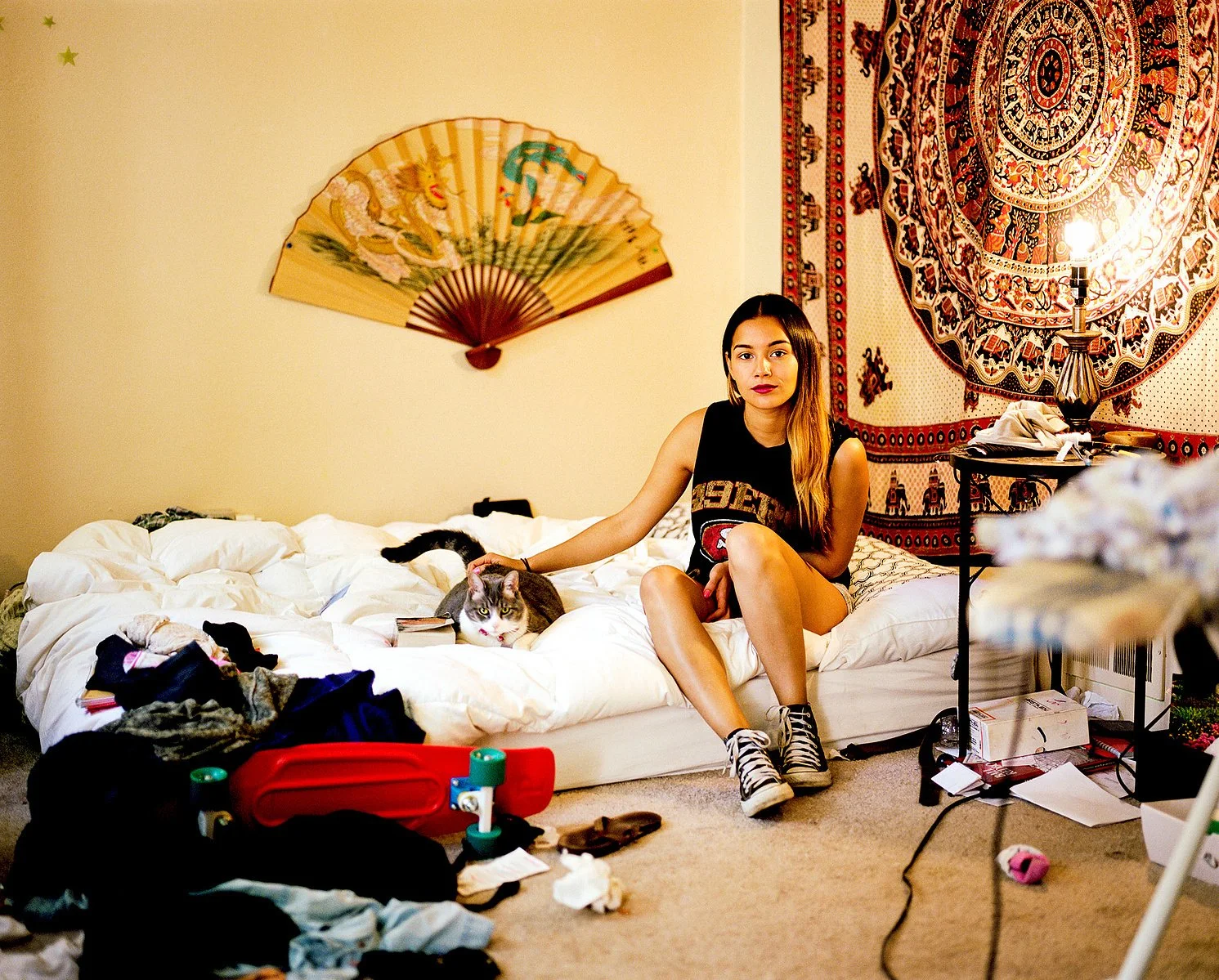
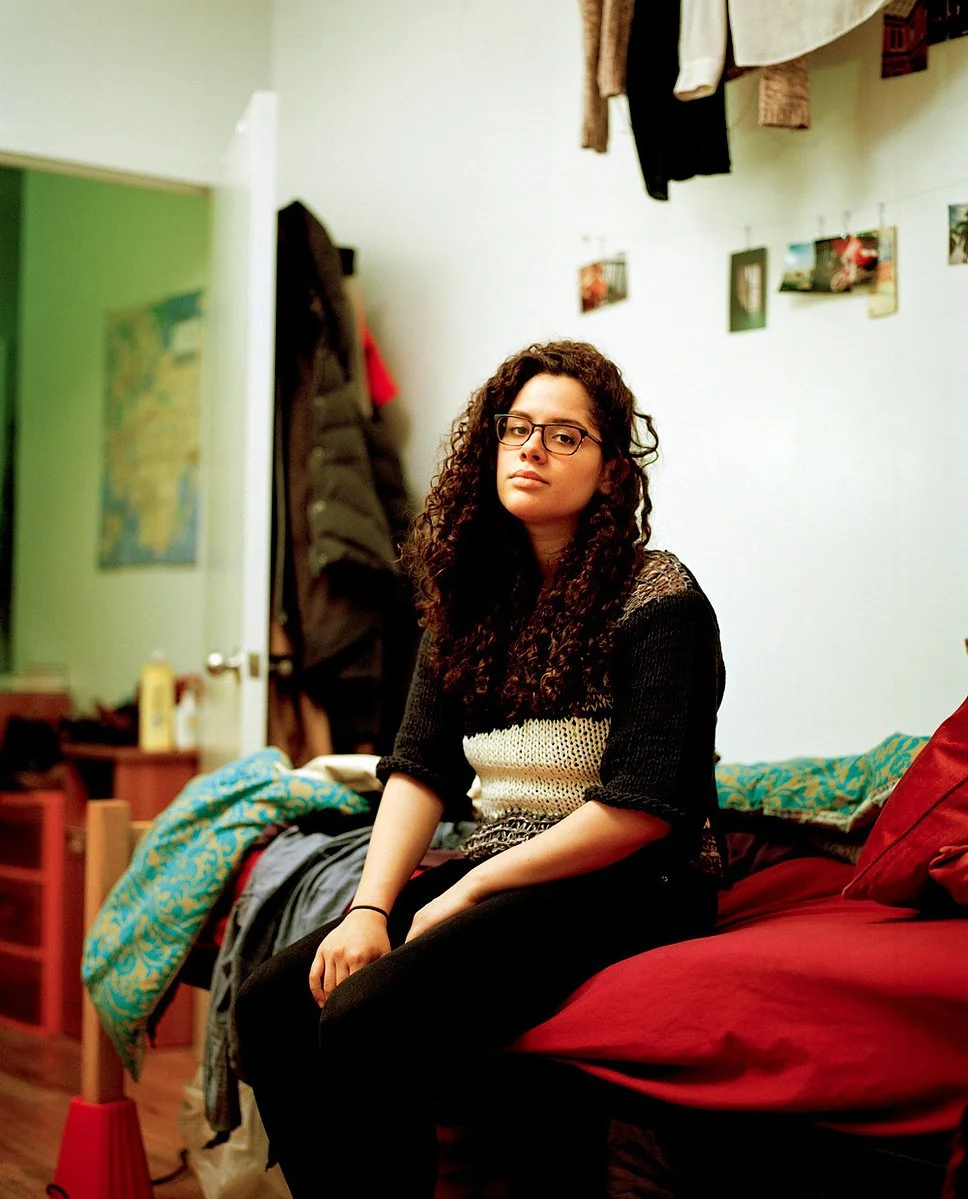
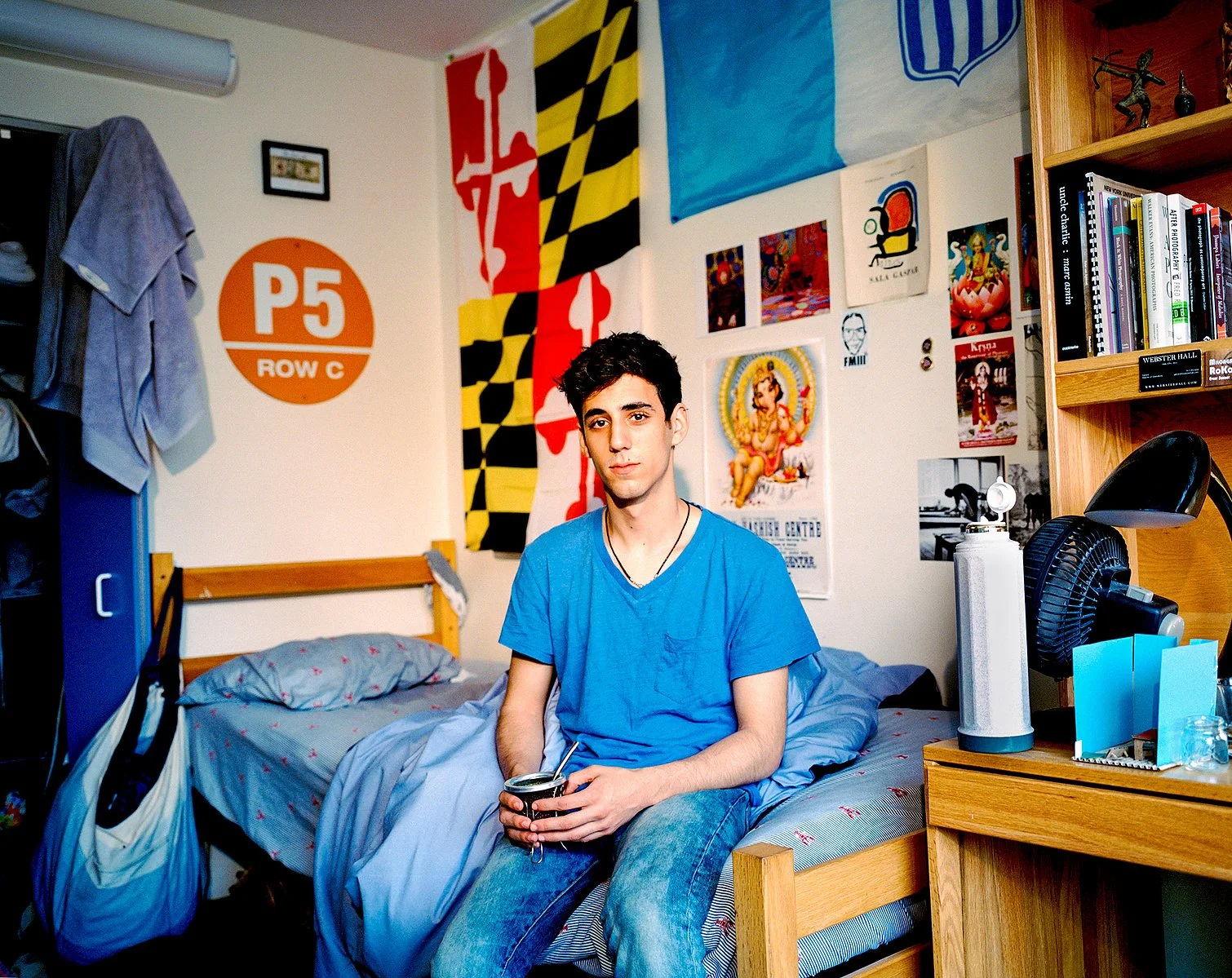
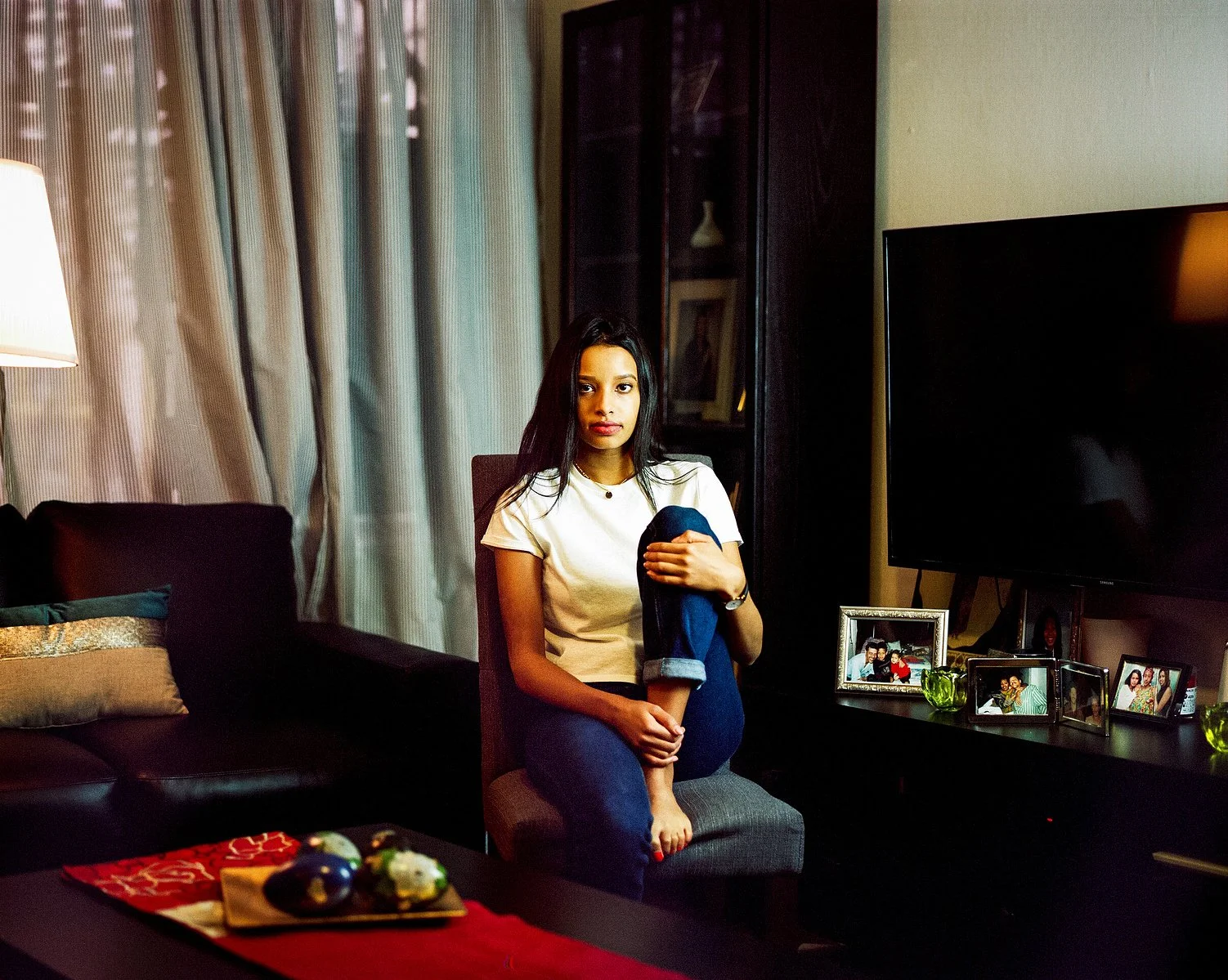
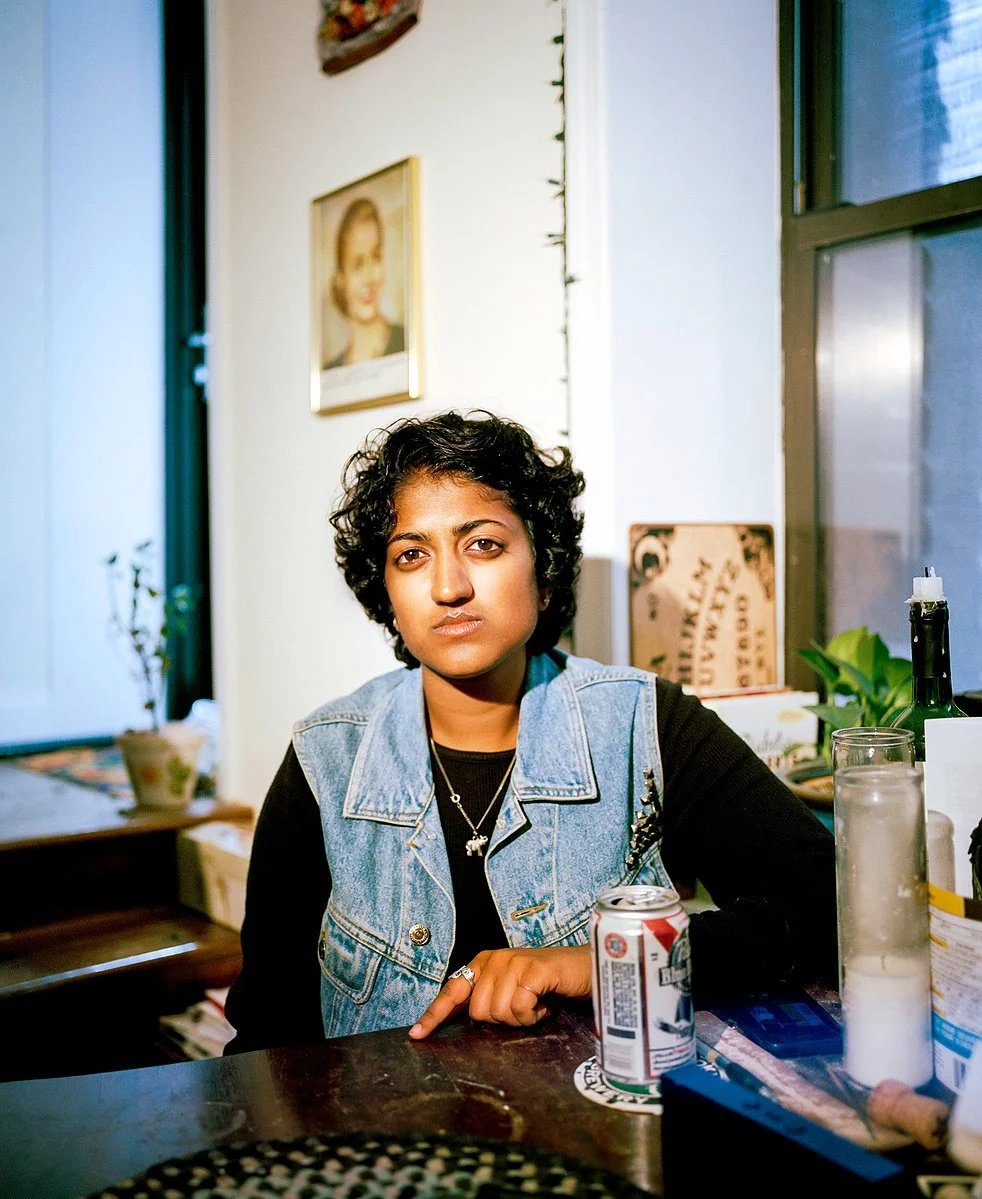
All IMAGES ARE FROM QUETZAL MAUCCI’S CHILDREN OF IMMIGRANTS SERIES.
My current project, By The Time She Grows Up, explores my personal family structure, being raised by two queer mothers, Lucrecia and Flavia, who migrated from Peru and Argentina to the United States. I explore queer family representation, identity, and social constructs.
This project is split into two parts: my family’s story and a wider community-sourced archive. The first part is an intimate exploration of my relationship with my mothers and my experience growing up in a society often resistant to queer families. A selection of this work, combining family photographs, collected memorabilia, my own photographs, and writing, was published in Time Magazine in 2024. I am currently revisiting recorded interviews with my mothers and shaping a photobook that will hopefully conclude this chapter of the project.
The second part is the Queer Family Archive, which is an ongoing artist-led, community-sourced archive where queer families can share their stories and perspectives. Rather than photographing participants, I act as a facilitator, dissolving traditional photographer-participant hierarchies. The archive combines oral histories, writing, family archives, and photography, highlighting lived experiences and diverse family structures.
Growing up in the 90s, I saw almost no representation of family structures like mine in media or photography, and I often felt unsafe sharing my reality. While there have been significant legal and social changes for queer communities, anti-LGBTQIA+ laws and attacks continue globally, making this work urgent and part of a broader, ongoing conversation and resistance.
Both By The Time She Grows Up and the Queer Family Archive are about connection. It asks how we hold space for each other, define family, and build futures rooted in care. It is a process of reclaiming personal and collective narratives, and exploring how art and archives can generate understanding, healing, and solidarity.
Your projects often return to childhood, your own and others’. How has revisiting those early memories complicated or softened the truths you hold now?
Revisiting my childhood, my early memories, and my relationship with my mothers and society has both complicated and softened my understanding of myself, of society, and of belonging.
Looking back on early memories has been difficult and vulnerable. I wasn’t fully aware that I was feeling unsafe during parts of my childhood, nor did I know how to process those feelings. I also didn’t understand that they were connected to broader societal structures affecting my family and me at the time. Through my work and with age, I have been able to reflect on and begin to make sense of these experiences.
When working with memories of trauma, I’ve had to recognize my own boundaries and needs as well as those I work with, and allow myself the time and space to create the work. Ultimately, taking care of my well-being and mental health is more important than the work itself. There were moments when I wasn’t sure I could continue the work. During those times, stepping back, looking at other work, or allowing myself to do something different became necessary. At other moments, making the work itself became an act of care.
So much of your work holds the tenderness and ache of “in-between” identity — but also moments of real joy, safety, and recognition (like the warmth of community in San Francisco, or your mothers’ worlds of activism and care). When you think about belonging, what are the small, imperfect, everyday moments or rituals that make you feel most grounded or most “at home,” even if they don’t fit any tidy definition?
In short, nature, kindness, loved ones, conversations, protests, and boundaries are what make me feel most grounded. Cooking food as a ritual, cooking for others as a way of coming together, and using food as a space for discussion are all important to me. Walking as meditation, walking as research. Care in community. Taking time away from my work, both personal practice and teaching, and enjoying other experiences. These are the moments I feel at home within myself.
Lastly, is there a recommendation you can pass on to our readers (ideally something connected to diasporic communities)? It could be a book, a song, a film, a place, a meal, an artwork, or even someone to follow. Anything you think should be on their radar.
Work that is in dialogue with resistance inspires me to look, create, discuss, and question. Currently, I am reading Journal of an Ordinary Grief by Palestinian writer Mahmoud Darwish, an incredible book that blends poetic essays and autobiography. One of the most important books I have read.
Here are some recommendations of photography and artwork that explore diasporic communities, resistance, or what it means to be human– works I’ve recently been reflecting on and immersing myself in: the work of William Camargo, his Latinx Family Photo Archives, as well as his new photobook, Origins and Displacement. Trigger 6: Assemblies guest-edited by Taous Dahmani and in collaboration with FOMU Antwerp. Maen Hammad’s Amira’s Castle, Tina Farifteh’s When I Saw the Sun and the Moon at the Same Time, which was part of the BredaPhoto Festival 2024. Work by Naomieh Jovin, Marie Smith, Aldo Cervantes, Lorena Molina, Lina Geoushy, Arturo Soto, Alan Chin’s Chinese American Photo Albums, and Vi Nguyen’s Heart Size is Normal, Lung Fields are Clear. Roots to Fruits, both a publisher and a magazine, are creating important work that they describe as “facilitating intergenerational and decolonial dialogue.” My students are inspiring me as well. Last year, my student Yasmin Elhassine explored the Moroccan community on Golborne Road in London, creating a newspaper that engaged with the community through combined interviews and photographs. Leila Mobasheri, coming from an Iranian background, focused on conversing with children of migrant parents in the U.K., producing a photographic series, an exhibition, and recorded interviews. There is so much work out there that it is difficult to only name a few!
Quetzal Maucci is a lens-based artist and educator living in London, originally from San Francisco, raised by two queer and migrant women from Peru and Argentina. She is part of the non-profit Women Photograph, which elevates the voices of women and nonbinary visual journalists, and is a Lecturer of Photography at Kingston University. Her current projects include facilitating and building her Queer Family Archive project, a collaborative initiative that invites queer families worldwide to contribute photographs, interviews, and reflections.
To view more of her work, visit her website and follow her on Instagram.
FOR MORE RECS LIKE THIS ONE, CHECK OUT THE REST OF VOL. 002:
